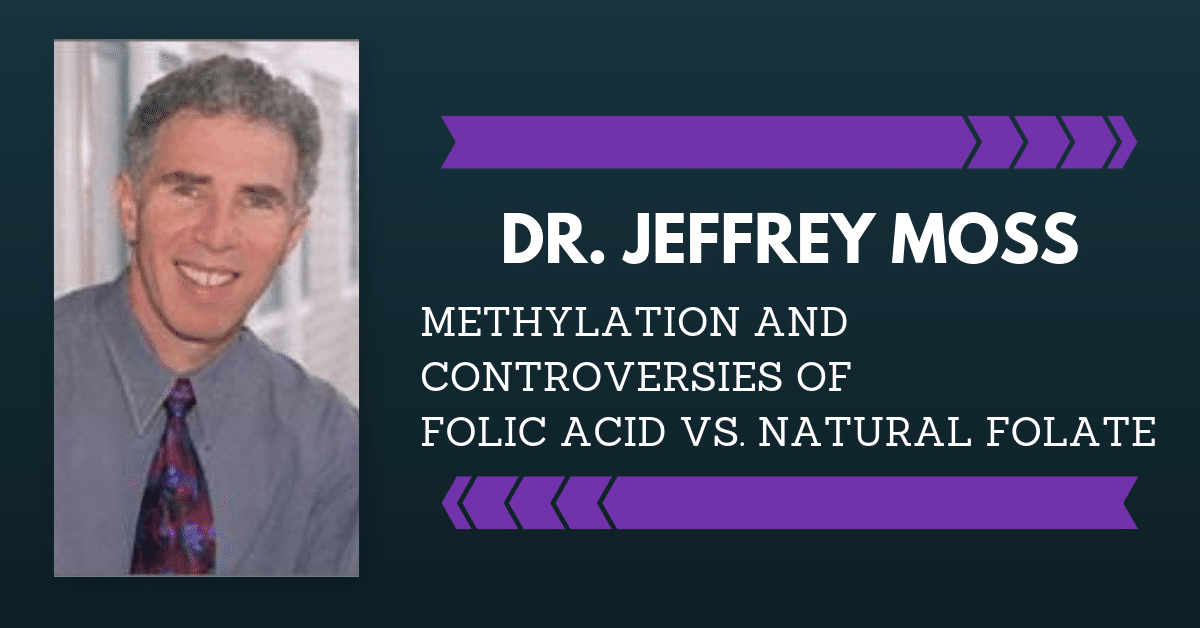
Jeffrey Moss, D.D.S., C.N.S., D.A.C.B.N. Methylation and controversies of folic acid vs. natural folate. May 20 2017
Dr. Moss is a dentist who has devoted his life to nutrition and now has a doctor’s nutrient company, a global newsletter, and lectures worldwide. On this show Drs. Berkson and Moss discuss the pitfalls and unknown issues surrounding methylation and MTHFR. You’ll learn what exactly methylation is and why you should care. You’ll understand its purpose inside every human body. You’ll be able to know beyond a doubt what a polymorphism is. What is the MTHFR polymorphism? And by the end of this show, you’ll appreciate the controversies surrounding MTHFR polymorphisms, and safe steps to protect yourself and those you love.
Moss and Berkson discuss health issues related to the MTHFR polymorphism. But there’s another important and not well-recognized problem: the different impacts of supplementing with “synthetic” folic versus “natural” folate, especially on people with the MRHFR polymorphism.
Most people and even many physicians do not realize that folic acid is not a natural vitamin. It’s a “synthetic” version of the natural vitamin folate.
Why would most people and doctors regard folic acid as a natural vitamin?
When the vitamin industry wanted to first add folate, Vitamin B9, to supplements, the natural form couldn’t be stabilized. The industry sought to create a new form of folic acid that could be easily stabilized and inexpensive. They developed folic acid. But it’s a synthetic compound.
Remember, natural folate couldn’t be stabilized to be used inside vitamin products inside a bottle that would sit on shelves for months. So a synthetic version was the answer at that time.
Fast forward to today, and the industry can now stabilize natural folate. But new questions arise. Is it better to use the less costly synthetic folic acid or the more costly natural folate version? What are the differences? What are the health risks? Which version works better for what conditions?
On this show, we discuss in-depth the pros and cons of each form of folate. Folate is robustly found in green leafy veggies, often referred to as foliage. That’s how vitamin B9 got its name. Foliage. Folate. Folate is a well loved member of the B vitamin family. It helps methylation occur throughout the body, so many biochemical actions can occur.
Folate is also a critical factor in gut wall health. Growing polyps are a sign of inadequate gut wall folate. Many medications used for serious autoimmune diseases and cancer interventions often rinse folate out of the body. Then a drug might be prescribed to help hold folate in the gut mucous tissues so gut health will not be compromised.
It has been suggested that folic acid supplementation will mask a vitamin B12 deficiency, leading to the thought that perhaps MTHF supplementation is “always” best. We discuss if this is true… or not.
Dr. Moss’s research has led him to feel that folic acid supplementation has been unfairly maligned, but he still favors MTHF supplementation for everyone, including individuals with the MTHFR polymorphism. But he is very firm on how dosage can help or harm you, and this is reflected in the doctor’s line of nutrients he has developed.
This show contains life-saving, informative dialogues that you don’t often get to hear or benefit from. This show will take your knowledge of B vitamins and genetic glitches to the next level.
Moss introduces the unappreciated yet critical concept of “unreduced folic acid” and the potential health issues surrounding it. We discuss exact dosages of folic acid and folate that are needed to avoid unhealthy, excessive levels of unreduced folic acid.
We discuss the controversial issue of folic acid supplementation in people with cancer, a history of cancer, or those at high risk of developing cancer.
Behind the scenes, unknown to many, there has been a growing debate revolving around food fortification because it contains folic acid. We discuss how folic acid in excess may be contributing to the rise of cancers and in making pre-existing cancer cells proliferate (grow out of control).
When folic acid was first added to fortified foods, nutritional scientists had no idea people would be eating out so much and be exposed to so many diverse foods that contained so much synthetic folic acid. Today people get exposed to folic acid in processed foods and also in many supplement products. Our exposure to folic acid is much higher than anyone thought might occur.
There are issues with being exposed to these high levels of synthetic folic acid.
There are pros and cons of supplementing with folic acid compared to folate, for various conditions and at various dosages.
In some studies, folic acid is more protective for certain conditions. But in excess, it may increase our risk of other conditions.
Given the clinical nuances surrounding folic acid, Dr. Moss discusses important information surrounding supplementation with MTHF and the pros and cons of fortifying food with MTHF.
Moss points out potential health issues with excess natural MTHF intake.
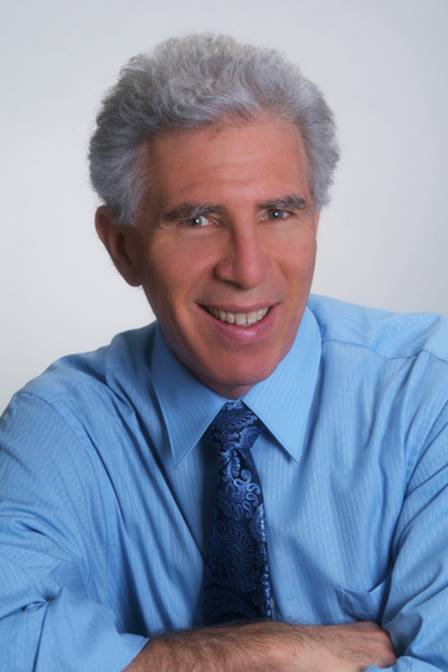
Dr. Jeffrey Moss is a graduate of the University of Michigan Dental School. But instead of focusing only on dentistry, Dr Moss’s passion was to merge nutrition into his dental practice, which he did, as a visionary, for many years. In 1992, Dr. Moss founded Moss Nutrition Products. With his wife, Joanne Goding, they built Moss Nutrition.
In 2009, the company expanded to include its own Moss Nutrition Select professional supplement line, one of the few supplement lines in the country whose sales are strictly limited to health care professionals and their patients.
Dr. Moss publishes his bi-monthly newsletter “Moss Nutrition Report”, a review and commentary on controversial and cutting-edge issues in the practice of nutritional medicine. In high demand by leading clinicians since its inception in 1987, this publication is now distributed globally.
Contact at: (800) 851-5444 x108 ● Email: [email protected]